
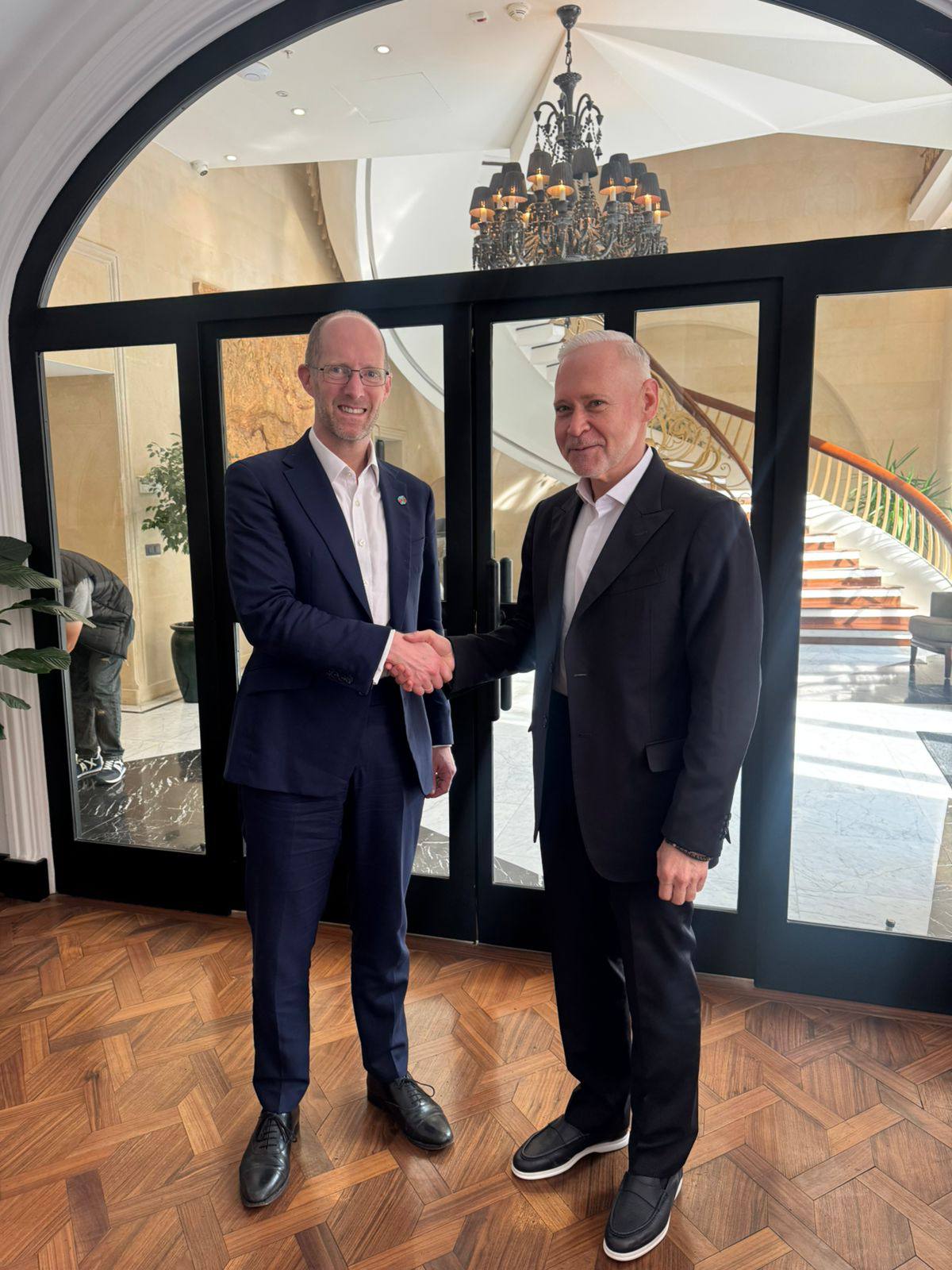
The discussion focused primarily on one of the key joint projects with the EBRD—the procurement of equipment for the decentralization of heat supply, specifically cogeneration units and modular boiler houses.
These solutions are intended to help Kharkiv replace the capacity lost due to enemy strikes on major energy facilities, particularly TPP-5. The total project cost is expected to be financed through loans and grants of up to 45 million euros. These funds are planned to be used for the purchase of energy equipment and the implementation of solutions that will strengthen Kharkiv’s energy independence.
Ihor Terekhov emphasized that Kharkiv is purposefully building a new model of energy resilience.
“After the attacks on major energy facilities, we clearly understand: Kharkiv needs a different system. One that is less vulnerable, more decentralized, and capable of operating even under extreme conditions. That is why, together with the EBRD, we are advancing projects involving cogeneration, modular boiler plants, and other equipment that will allow us to provide people with heat and keep the city running,” the mayor noted.
Special attention was paid to the Kharkiv Metro during the talks because, according to the mayor, in wartime the subway serves a triple function for the city: it acts as a transportation artery, a reliable shelter, and a safe educational space for children. Therefore, the uninterrupted operation and energy autonomy of the metro are essential for Kharkiv’s daily life.
“It is important for us to move not only toward energy generation but also toward energy storage. We see that for Kharkiv, such systems can significantly strengthen critical infrastructure. We need powerful battery energy storage systems that allow us to store electricity and use it when the system experiences a shortage or peak load. That is why we are very interested in cooperating with the EBRD in this area as well,” concluded Ihor Terekhov.
In turn, Harry Boyd-Carpenter emphasized that the partnership with Kharkiv is of particular importance to the bank.
“Kharkiv operates under extremely challenging conditions, yet it demonstrates the ability to make quick decisions and implement projects that improve people’s lives. We are proud of our partnership with the city and recognize how crucial it is to support its critical infrastructure, energy sector, and long-term recovery,” noted Harry Boyd-Carpenter.
Finally, the parties outlined further areas of cooperation in the fields of social housing, construction, and the reconstruction of damaged housing stock.